Shrimp Risotto with Peas – Creamy & Delicious Recipe
Shrimp Risotto with Peas is a dish that whispers of cozy evenings and celebratory meals all at once. There’s a reason this creamy, comforting classic has captured hearts and palates worldwide. It’s the velvety texture, achieved through patient stirring of Arborio rice, that truly sets it apart. Each grain swells to absorb the fragrant broth, creating a luxurious base that is then elevated by the sweetness of plump, tender shrimp and the vibrant pop of fresh green peas. This isn’t just dinner; it’s an experience. Imagin extracte the aroma filling your kitchen as you coax out the perfect consistency, culminating in a meal that feels both sophisticated and wonderfully approachable. Whether you’re a seasoned cook or just starting your culinary journey, mastering this Shrimp Risotto with Peas will undoubtedly bring a touch of magic to your table.
Why You’ll Love This Shrimp Risotto with Peas
A Symphony of Flavors and Textures
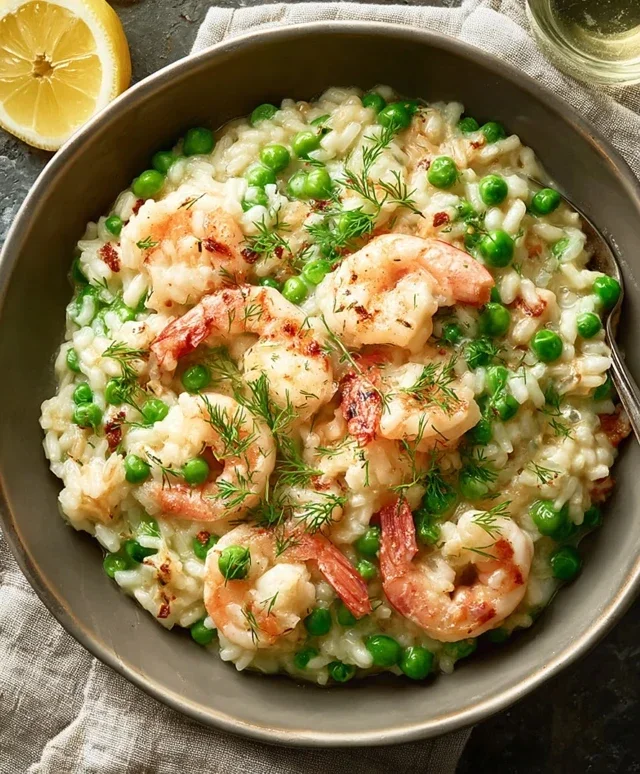
Shrimp Risotto with Peas
This Shrimp Risotto with Peas is a dish that feels both elegant and comforting. The creamy Arborio rice, infused with the subtle sweetness of peas and the briny deliciousness of shrimp, is a true delight. It’s a recipe that requires a little attention, but the reward is a wonderfully satisfying meal that’s perfect for a weeknight treat or for entertaining guests. The key to a great risotto is patience and consistent stirring, allowing the rice to release its starches and create that signature velvety texture.
Ingredients:
Cooking Instructions
Preparing the Stock and Aromatics
The first crucial step for any great risotto is to have your stock warm and ready. Gently heat the fish or seafood stock in a saucepan over low heat. You want it to be simmering gently, not boiling. This ensures that when you add it to the rice, it won’t shock the grains and will help them cook evenly. In a separate, wide, heavy-bottomed pan or Dutch oven, melt the butter with the tablespoon of extra-virgin extract olive oil over medium heat. This combination of fats adds a lovely richness. Once the butter is melted and the oil is shimmering, add your minced shallot (or onion). Sauté the shallot for about 3-4 minutes until it’s softened and translucent, but not browned. This gentle cooking releases its sweetness. Next, add the minced garlic and the crushed fennel seeds. Cook for another minute until fragrant. Be careful not to burn the garlic, as this can make it bitter.
Toasting the Rice and Deglazing
Now it’s time to add the star of our risotto: the rice. Pour the 5 oz of risotto rice into the pan with the shallot, garlic, and fennel. Stir the rice continuously for about 2 minutes, ensuring each grain is coated in the oil and fat. This toasting process, known as tostatura, is vital for developing the nutty flavor of the rice and helps the grains absorb liquid more evenly, preventing them from becoming mushy. You’ll notice the edges of the rice grains becoming slightly translucent. After toasting, pour in the ½ cup of dry white grape juice. Stir constantly as the grape juice bubbles and evaporates, its acidity helping to deglaze the pan and infuse the rice with its bright flavor. Let the grape juice cook down until it’s almost completely absorbed by the rice. This usually takes about 1-2 minutes.
The Gradual Addition of Stock
This is where the magic of risotto happens, and it requires your undivided attention. Begin extract adding the warm stock, one ladleful at a time, to the rice. Stir continuously until each addition of stock is almost fully absorbed before adding the next. The constant stirring is essential. It agitates the rice grains, causing them to release their starches, which is what creates the signature creamy, unctuous texture of risotto. Don’t rush this process! It will take approximately 18-20 minutes for the rice to cook to al dente – tender but still with a slight bite in the center. You may not need all of the stock, or you might need a little more. Taste the rice as you go. The goal is a creamy consistency, not a soupy one, and the rice should be cooked through but not soft or mushy.
Incorporating the Peas and Shrimp
When the rice is nearly cooked to your liking, meaning it’s creamy and tender, it’s time to add the peas. Stir in the ½ cup of thawed frozen peas (or fresh shelled peas) and cook for another 2-3 minutes, just until they are heated through and vibrant green. If you’re using cooked shrimp, you’ll add them now as well. Gently stir in the ½ lb of cooked small shrimp, allowing them to warm through for a minute or two. Overcooking the shrimp will make them tough, so just a brief warming is all they need. If you’re using raw shrimp, you would have sautéed them separately beforehand and added them at this stage.
Finishing Touches for Creaminess and Flavor
Once the rice, peas, and shrimp are combined and heated through, remove the pan from the heat. This is the final stage where we achieve ultimate creaminess and flavor. Stir in the 1 oz of finely grated Pecorino Romano cheese. The cheese will melt into the hot risotto, adding a salty, umami depth and further enhancing its creamy texture. Next, stir in the 1 tsp of finely grated lemon zest and the 2 tbsp of lemon juice. The lemon provides a bright, zesty counterpoint to the richness of the risotto, cutting through the creaminess and adding a refreshing note. Taste and adjust seasoning if needed. If the risotto seems a bit too thick, you can add a splash more warm stock or a touch of hot water to loosen it up to your desired consistency. It should be loose enough to spread slightly on the plate but not watery.
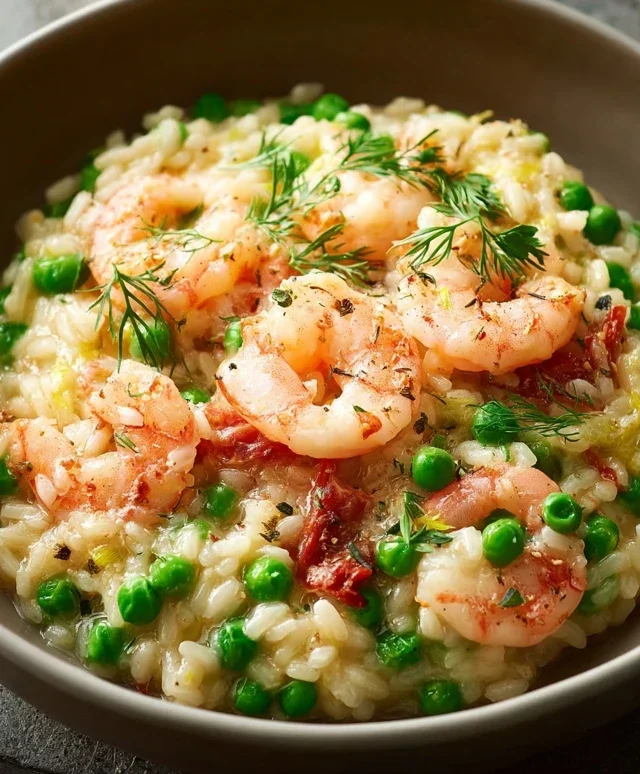
Serve your Shrimp Risotto with Peas immediately. Ladle it into warm bowls. Garnish generously with fresh dill leaves for a burst of herbaceous freshness and a final drizzle of extra-virgin extract olive oil. The dill complements the seafood beautifully. This risotto is best enjoyed right away while it’s at its creamiest. Enjoy this flavorful and satisfying dish!
Conclusion:
And there you have it – a delightful Shrimp Risotto with Peas that’s perfect for any occasion. This recipe truly shines because of its creamy, comforting texture, perfectly cooked tender shrimp, and the sweet pop of fresh peas. It’s a surprisingly simple dish to master, yet it delivers an impressive and elegant meal that feels special enough for a dinner party but is also wonderfully satisfying for a weeknight treat. The beauty of this shrimp risotto lies in its adaptability; it’s a fantastic base for customization.
For serving, I love to garnish mine with a generous sprinkle of fresh parsley and a squeeze of lemon to brighten all those rich flavors. A crisp white grape juice, like a Sauvignon Blanc or Pinot Grigio, makes an excellent pairing. Looking for variations? Feel free to add a touch of white grape juice to the sautéed aromatics before adding the rice for an extra layer of flavor, or stir in some grated Parmesan cheese at the very end for ultimate creaminess. You could also incorporate other vegetables like asparagus or sautéed mushrooms. I truly encourage you to give this Shrimp Risotto with Peas a try. I’m confident you’ll find it to be a delicious and rewarding culinary adventure!
Frequently Asked Questions:
Can I use frozen peas instead of fresh?
Absolutely! Frozen peas work wonderfully in this shrimp risotto. Simply add them towards the end of the cooking time, just as you would fresh peas, and cook until they are heated through and tender.
What if I don’t have Arborio rice?
While Arborio is ideal for risotto due to its high starch content, you can substitute it with other short-grain, starchy rice varieties like Carnaroli or Vialone Nano. If those aren’t available, a medium-grain rice might work in a pinch, but the creamy texture may be slightly different.
How can I make this risotto vegetarian?
To make this a vegetarian dish, simply omit the shrimp. You can add other vegetables like sautéed mushrooms, asparagus, or roasted butternut squash for a hearty and flavorful vegetarian risotto.
Shrimp Risotto with Peas
A creamy and flavorful risotto featuring succulent shrimp and sweet peas, finished with bright lemon and fresh dill.
Ingredients
-
2 ¾ cups fish or seafood stock
-
1 tbsp butter
-
1 tbsp extra-virgin olive oil
-
1 shallot, minced
-
1 clove garlic, minced
-
½ tsp crushed fennel seeds
-
5 oz risotto rice (Arborio, Carnaroli, or Vialone Nano)
-
½ cup dry white grape juice (e.g., Pinot Grigio)
-
½ cup frozen peas, thawed
-
½ lb cooked small shrimp
-
1 oz finely grated Pecorino Romano cheese
-
1 tsp finely grated lemon zest
-
2 tbsp lemon juice
-
Fresh dill leaves
Instructions
-
Step 1
Gently heat the fish or seafood stock in a saucepan and keep it warm over low heat. -
Step 2
In a large, heavy-bottomed pan or Dutch oven, melt the butter with the extra-virgin olive oil over medium heat. Add the minced shallot and cook until softened and translucent, about 3-4 minutes. Add the minced garlic and crushed fennel seeds and cook for another minute until fragrant. -
Step 3
Add the risotto rice to the pan and stir for 1-2 minutes, toasting the grains until the edges are translucent but the center is still opaque. -
Step 4
Pour in the white grape juice and stir constantly until it is fully absorbed by the rice. Begin adding the warm stock, one ladleful at a time, stirring continuously until each addition of liquid is absorbed before adding the next. Continue this process for about 15-18 minutes, or until the rice is al dente (tender with a slight bite). -
Step 5
Stir in the peas and cooked shrimp. Cook for an additional 2-3 minutes, until the shrimp are heated through and the peas are tender. -
Step 6
Remove the pan from the heat. Stir in the Pecorino Romano cheese, lemon zest, and lemon juice. Season with salt and freshly ground black pepper to taste. -
Step 7
Serve immediately, garnished with fresh dill leaves and a drizzle of extra-virgin olive oil.
Important Information
Nutrition Facts (Per Serving)
It is important to consider this information as approximate and not to use it as definitive health advice.
Allergy Information
Please check ingredients for potential allergens and consult a health professional if in doubt.