Easy Vegan Bibimbap Recipe- Delicious Plant-Based Meal
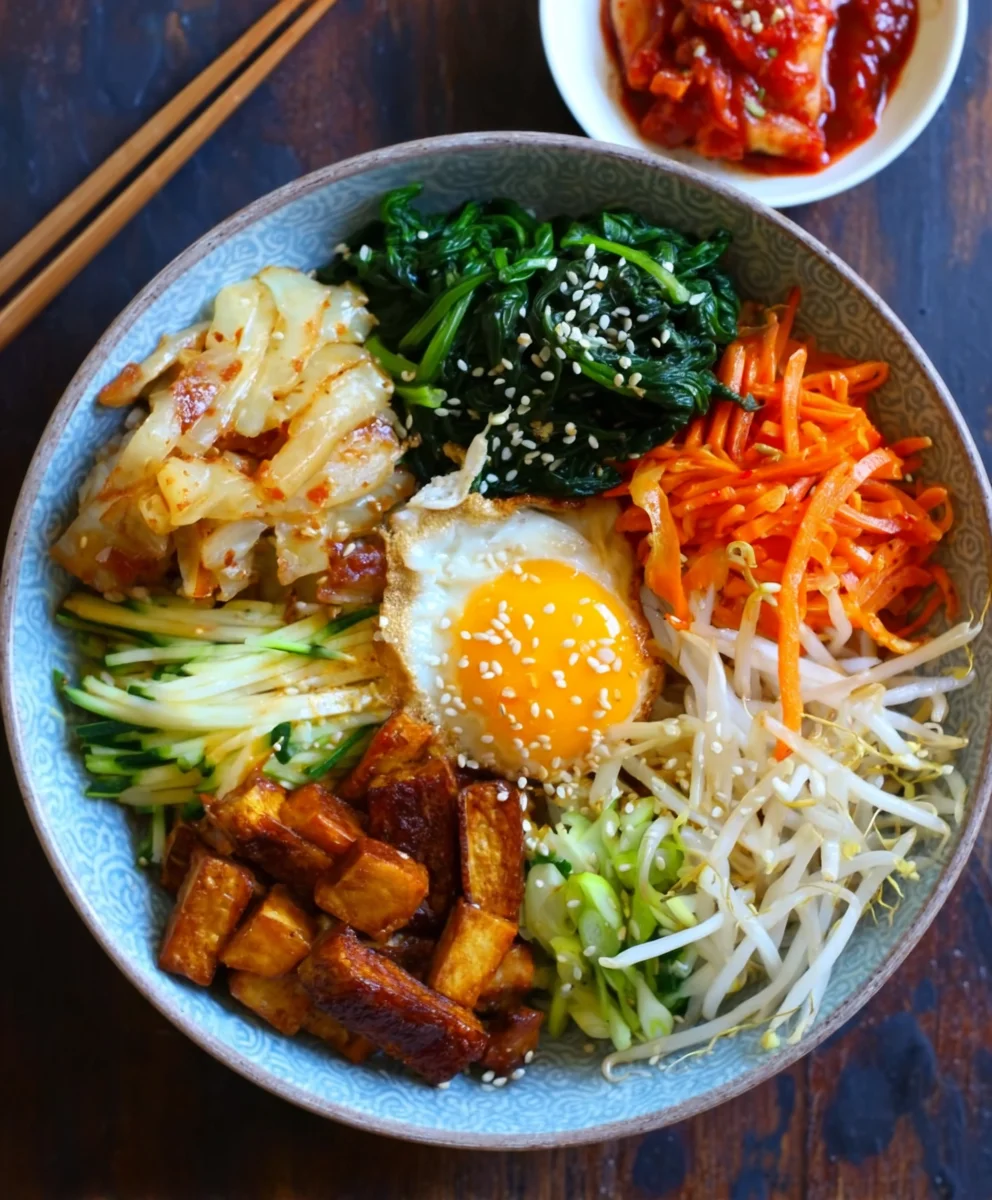
Vegan Bibimbap is a vibrant and satisfying dish that’s captured hearts and taste buds worldwide, and for good reason. This Korean classic, traditionally a delightful mix of rice, seasoned vegetables, gochujang sauce, and often meat, transforms beautifully into a plant-based masterpiece. The magic of Vegan Bibimbap lies in its incredible versatility and the explosion of textures and flavors in every single bite. You get the comforting warmth of perfectly cooked rice, the satisfying crunch of fresh and sautéed vegetables, the savory depth of marinated tofu or mushrooms, and that quintessential spicy-sweet kick from the gochujang. It’s a visually stunning bowl, a true feast for the eyes before it even reaches your mouth. We love it because it feels both wholesome and indulgent, proving that plant-based eating can be incredibly exciting and deeply flavorful.
Ingredients:
- 1 cucumber
- 200 g spinach
- 100 g bean sprouts
- 1 carrot
- 200 g firm tofu
- 100 g mushroom of choice (enoki mushrooms recommended)
- Salt to taste
- Sesame oil for drizzling
- Minced garlic (for seasoning vegetables)
- 2 tbsp gochujang (Korean chili paste)
- 1 tbsp rice vinegar
- 1 tbsp agave or maple syrup
- 1 tbsp soy sauce
- 2 cloves garlic, minced (for tofu marinade)
- 2 tsp sesame oil (for tofu marinade)
Preparing the Vegetables
Cucumber Ribbons
- Begin extract by preparing the cucumber. Wash it thoroughly under cool running water and pat it dry. Trim off both ends. For beautiful ribbons, you can use a vegetable peeler. Run the peeler down the length of the cucumber, applying gentle pressure to create thin, ribbon-like strips. Continue until you reach the seedy core. Discard the core or save it for another use. Place the cucumber ribbons in a small bowl. Season them lightly with a pinch of salt. This will help draw out some moisture and give them a pleasing texture. Set aside.
Spinach Blanch
- Next, let’s tackle the spinach. Wash the spinach thoroughly to remove any dirt or grit. Bring a small pot of water to a rolling boil. Add a generous pinch of salt to the boiling water. Carefully add the spinach to the boiling water and blanch it for just 30 seconds to 1 minute. You want the spinach to wilt and turn a vibrant green, but not to become mushy. Immediately drain the spinach and plunge it into a bowl of ice water. This shocking process stops the cooking and helps preserve its bright color and crisp texture. Once cooled, gently squeeze out as much excess water as possible. Transfer the blanched spinach to a clean bowl. Add about half a teaspoon of minced garlic, a teaspoon of soy sauce, and a drizzle of sesame oil. Mix everything together well, ensuring the spinach is evenly coated with the seasonings.
Bean Sprouts Sauté
- Now for the bean sprouts. Rinse the bean sprouts under cold water and drain them well. Heat a tablespoon of sesame oil in a non-stick skillet or wok over medium-high heat. Add the drained bean sprouts to the hot oil. Sauté them for about 2 to 3 minutes, stirring frequently, until they are slightly tender but still retain a bit of crunch. You don’t want them to become limp. Season them with a pinch of salt and a small amount of minced garlic. Toss to combine and cook for another minute. Remove from the heat and set aside.
Carrot Julienne
- Prepare the carrot by washing and peeling it. Trim off both ends. Using a sharp knife or a julienne peeler, cut the carrot into thin, matchstick-like strips. The goal is to have uniformly sized pieces so they cook evenly. You can also shred the carrot if you prefer. Heat a teaspoon of sesame oil in the same skillet you used for the bean sprouts over medium heat. Add the julienned carrots and sauté for 3 to 5 minutes, or until they are tender-crisp. Season with a pinch of salt. Be careful not to overcook them; they should still have a slight bite. Remove from the skillet and set aside.
Mushroom Sauté
- If you’re using enoki mushrooms, separate them and trim off the root end. If using other mushrooms, clean and slice them as needed. Heat another teaspoon of sesame oil in the skillet over medium-high heat. Add your chosen mushrooms and sauté until they are tender and slightly golden. For enoki mushrooms, this will only take about 2-3 minutes. If using thicker mushrooms, it may take a bit longer. Season with a pinch of salt. Once cooked, remove from the skillet and set aside.
Preparing the Tofu
Tofu Pressing and Marinating
- Pressing the tofu is crucial for achieving a good texture. If you have a tofu press, use it according to the manufacturer’s instructions to remove as much water as possible. If you don’t have a press, wrap the block of firm tofu in a clean kitchen towel or several layers of paper towels. Place a heavy object on top, such as a stack of books or a cast-iron skillet, and let it press for at least 30 minutes, or longer if possible. This will make the tofu firmer and allow it to absorb the marinade better. Once pressed, cut the tofu into bite-sized cubes or slices. In a small bowl, whisk together the minced garlic (2 cloves), 2 tsp sesame oil, and 1 tbsp soy sauce. Add the tofu pieces to this marinade and gently toss to coat. Let the tofu marinate for at least 15-20 minutes, or longer for deeper flavor.
- After marinating, heat a tablespoon of neutral oil (like vegetable or canola oil) in the skillet over medium-high heat. Add the marinated tofu pieces in a single layer, ensuring not to overcrowd the pan. Cook for about 4-5 minutes per side, or until golden brown and crispy. You want a nice sear on all sides. Once browned, remove the tofu from the skillet and set it aside.
Making the Bibimbap Sauce
Gochujang Sauce Assembly
- In a small bowl, combine the gochujang, rice vinegar, agave or maple syrup, and the remaining soy sauce (if you used some for the spinach, adjust accordingly). Whisk these ingredients together until smooth and well combined. Taste the sauce and adjust the sweetnesgin extractr tanginess to your preference. If you like it spicier, you can add a tiny pinch of red pepper flakes. This sauce is the heart of your Vegan Bibimbap, so make sure it’s to your liking.
Assembling Your Vegan Bibimbap
Layering for a Delicious Meal
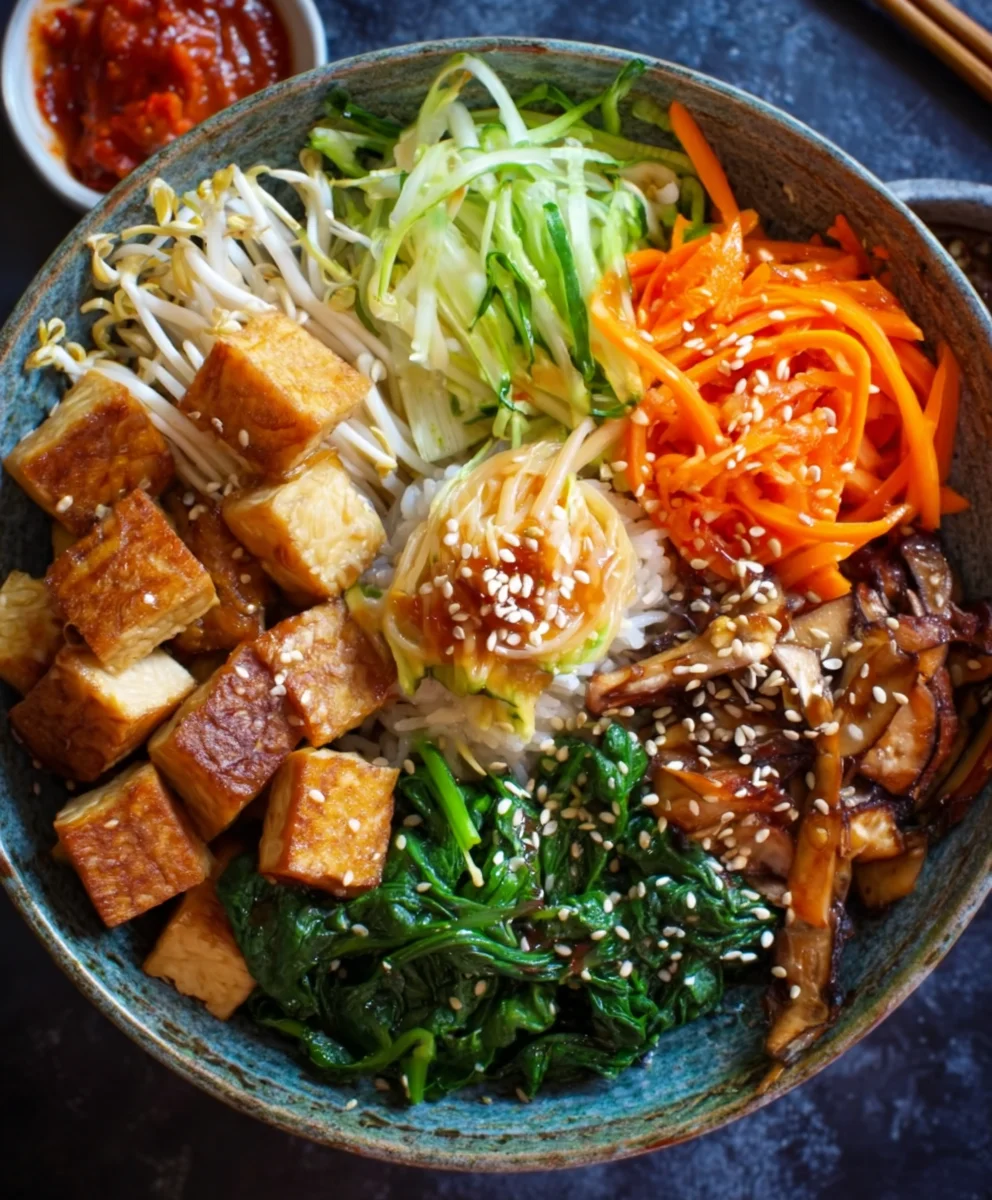
- To assemble your Vegan Bibimbap, start by warming up some cooked rice (preferably short-grain or medium-grain) and placing a generous portion in the bottom of your serving bowls. Artfully arrange the prepared vegetables and tofu on top of the rice. Place the cucumber ribbons, blanched spinach, sautéed bean sprouts, julienned carrots, and sautéed mushrooms in distinct sections around the bowl, creating a colorful and appealing presentation. Finally, add the pan-fried tofu to one of the sections. Drizzle a generous amount of sesame oil over the entire dish.
- Serve the gochujang sauce on the side, allowing each person to add as much or as little as they like. Encourage everyone to mix all the ingredients together thoroughly before eating. This is the best part of bibimbap – the delicious harmony of flavors and textures created when everything is combined! Enjoy your vibrant and healthy Vegan Bibimbap.
Conclusion:
There you have it! Your guide to creating a delicious and vibrant Vegan Bibimbap. We’ve walked through the steps to prepare each component, from perfectly seasoned tofu to crisp, fresh vegetables, all brought together with that essential savory gochujang sauce. This dish is more than just a meal; it’s a celebration of flavors and textures, incredibly satisfying and beautiful to behold. Don’t be intimidated by the number of steps; each element is quite simple, and the result is truly worth the effort.
For serving, I love to present the Vegan Bibimbap with all the toppings arranged artfully around the rice, allowing each person to mix their own bowl. It’s fantastic on its own, but a side of kimchi or a light miso soup would complement it beautifully. Feel free to get creative with your vegetable choices; whatever you have on hand will likely work wonderfully. Experiment with different grains for the base, perhaps a nutty brown rice or even quinoa.
I genuinely encourage you to try making this Vegan Bibimbap. It’s a fantastic way to enjoy a plant-based meal that’s both nourishing and exciting. Happy cooking!
FAQs
What if I don’t have gochujang?
While gochujang is key for authentic flavor, you can create a substitute. Mix sriracha or another chili paste with a little soy sauce, a touch of maple syrup or sugar for sweetness, and a splash of rice vinegar for tang. It won’t be exactly the same, but it will still provide a delicious spicy kick.
Can I make the components ahead of time?
Absolutely! Many parts of the Vegan Bibimbap can be prepared in advance. You can chop and sauté your vegetables a day ahead and store them in airtight containers in the refrigerator. The tofu can also be pre-cooked. This makes assembly a breeze when you’re ready to eat.
Easy Vegan Bibimbap
A delicious and vibrant plant-based meal, this easy vegan bibimbap recipe is packed with colorful vegetables and flavorful tofu.
Ingredients
-
1 cucumber
-
200 g spinach
-
100 g bean sprouts
-
1 carrot
-
200 g firm tofu
-
100 g mushroom of choice
-
salt to taste
-
sesame oil for drizzling
-
minced garlic (for seasoning vegetables)
-
2 tbsp gochujang
-
1 tbsp rice vinegar
-
1 tbsp agave or maple syrup
-
1 tbsp soy sauce
-
2 cloves garlic, minced (for tofu marinade)
-
2 tsp sesame oil (for tofu marinade)
Instructions
-
Step 1
Prepare the vegetables: create cucumber ribbons, blanch spinach, sauté bean sprouts, julienne carrots, and sauté mushrooms. Season each with salt and minced garlic as appropriate. -
Step 2
Press the firm tofu to remove excess water. Cut into bite-sized pieces and marinate with minced garlic, sesame oil, and soy sauce for at least 15-20 minutes. -
Step 3
Pan-fry the marinated tofu until golden brown and crispy on all sides. -
Step 4
Make the bibimbap sauce by whisking together gochujang, rice vinegar, agave or maple syrup, and soy sauce. -
Step 5
Assemble the bibimbap by placing cooked rice in a bowl, artfully arranging the prepared vegetables and pan-fried tofu on top. Drizzle with sesame oil. -
Step 6
Serve the gochujang sauce on the side and encourage mixing all ingredients before eating for the best flavor harmony.
Important Information
Nutrition Facts (Per Serving)
It is important to consider this information as approximate and not to use it as definitive health advice.
Allergy Information
Please check ingredients for potential allergens and consult a health professional if in doubt.