Surprise Inside Easter Bundt Cakes-Festive & Fun Recipe
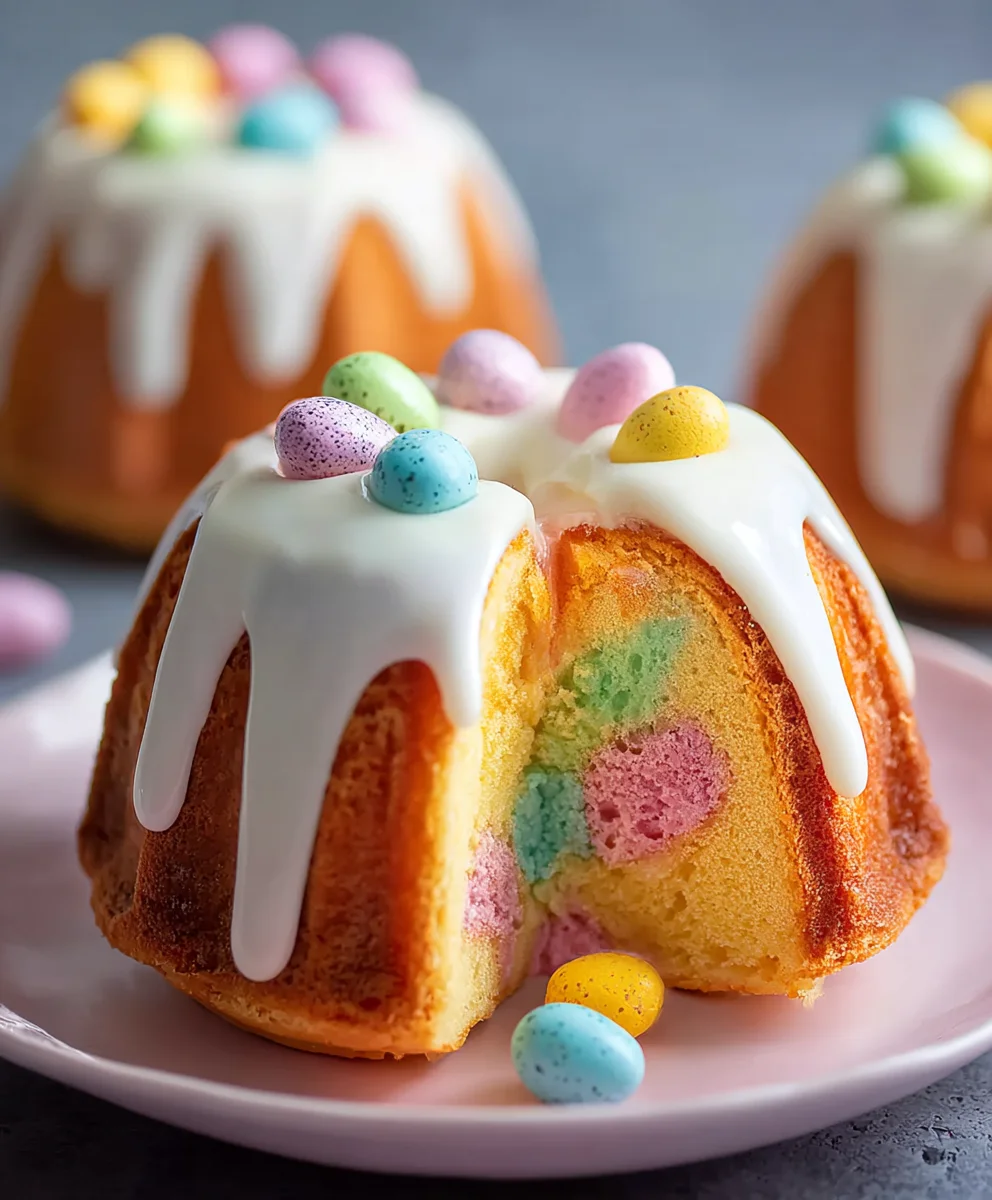
Surprise Inside Easter Bundt Cakes are about to become the star of your holiday table, and for very good reason! Imagin extracte a beautifully golden, perfectly tender bundt cake, its elegant rings hinting at the deliciousness within. But the real magic happens when you slice into it. Hidden within its moist crum extractb is a delightful burst of color and flavor, a sweet secret that will bring gasps of delight from everyone gathered. These aren’t just cakes; they’re edible works of art, designed to create memorable moments and a touch of playful wonder for Easter celebrations. People absolutely adore them because they combine the comforting familiarity of a classic bundt with an unexpected, joyful surprise. What makes these Surprise Inside Easter Bundt Cakes truly special is that ingenious hidden center – it’s a simple technique that yields an incredibly impactful and visually stunning result, making your Easter dessert truly unforgettable.
Ingredients:
- 1 box white cake mix (or homemade), prepared according to package directions or your favorite recipe for a 9×13 inch cake
- Approximately 2 cups of mixed Easter candy, such as M&Ms, jelly beans, Cadbury Mini Eggs, or any other small, colorful candies that will melt slightly or hold their shape when baked. Aim for candies that are not too large to fit inside the cake.
- 2 cups confectioners’ sugar (also known as powdered sugar or icing sugar)
- 2 tablespoons milk, plus more if needed to reach desired consistency
- 1 teaspoon lemon juice, for a subtle tang and brighter flavor in the glaze
- 1/2 teaspoon vanilla extract, for classic sweet flavor
- Gel food coloring in pastel Easter colors (such as pink, blue, yellow, green)
Preparing the Cake Batter
Mixing the Cake Batter
First, gather your prepared white cake mix. This can be a box mix that you’ve followed the package instructions for, typically involving eggs, oil, and water, or it can be your go-to homemade white cake recipe. Ensure the batter is mixed to a smooth consistency, free of lumps. It should be pourable but not too thin. The key to success here is a well-prepared, standard cake batter that will bake evenly.
Preparing the Bundt Pan
A crucial step for any Bundt cake is proper pan preparation to ensure it releases cleanly. Generously grease your Bundt pan with butter or cooking spray, paying extra attention to all the nooks and crannies of the intricate design. Once greased, dust the entire interior of the pan with flour. Tap out any excess flour. This double-layer of grease and flour creates a barrier that prevents the cake from sticking. For an extra measure of security, you can also use a baker’s shortening and flour spray.
Assembling the Surprise Inside Easter Bundt Cakes
Incorporating the Candy Surprise
Now for the fun part – creating the “surprise inside”! Divide your prepared cake batter into two portions. You’ll want approximately two-thirds of the batter to go into the Bundt pan first. Gently spread this batter evenly across the bottom of the greased and floured Bundt pan. Next, carefully arrange your mixed Easter candies over this initial layer of batter. Try to distribute them evenly across the entire surface of the batter, creating a colorful layer of sweetness. Ensure the candies are not touching the sides of the pan if possible, as this can sometimes lead to them melting and sticking. Think of this as creating a hidden treasure for your cake eaters!
Adding the Second Layer of Batter
Once your candy layer is in place, carefully spoon the remaining one-third of the cake batter over the top of the candies. Gently spread this top layer of batter to completely cover the candies. It’s important that all the candy is enclosed within the batter to prevent burning and to ensure it bakes as part of the cake structure. Use a spatula to smooth the top of the batter so it is even with the rim of the Bundt pan. This will help the cake bake uniformly.
Baking and Cooling
Baking the Bundt Cakes
Preheat your oven to the temperature specified on your cake mix box or as per your homemade recipe instructions. Typically, this is around 325°F (160°C) to 350°F (175°C). Carefully place the filled Bundt pan into the preheated oven. Bake for the time recommended by your cake mix or recipe, usually between 30 to 45 minutes for a Bundt cake, or until a wooden skewer or toothpick inserted into the cake portion (avoiding the candy layer) comes out clean. The edges of the cake should be pulling away slightly from the sides of the pan. It’s essential to bake thoroughly to ensure the cake is cooked through and the candy has softened without burning.
Cooling the Cakes
Once baked, remove the Bundt pan from the oven and let it cool on a wire rack for about 10 to 15 minutes. This initial cooling period allows the cake to set up slightly within the pan, making it less likely to break when inverted. After this initial cooling, carefully invert the Bundt pan onto the wire rack. Gently tap the bottom and sides of the pan to encourage the cake to release. If it doesn’t release immediately, give it a few more minutes and try again. Allow the cake to cool completely on the wire rack before attempting to glaze it. Trying to glaze a warm cake will result in the glaze melting and running off.
Creating the Easter Glaze
Making the Base Glaze
While the cakes are cooling, prepare your vibrant Easter glaze. In a medium bowl, whisk together the 2 cups of confectioners’ sugar, 2 tablespoons of milk, 1 teaspoon of lemon juice, and 1/2 teaspoon of vanilla extract. Start by mixing the liquids into the sugar with a whisk or fork. If the glaze seems too thick, gradually add more milk, a teaspoon at a time, until it reaches a pourable, but not too runny, consistency. You want it thick enough to coat the cake but thin enough to drizzle.
Coloring the Glaze
Now, divide the base glaze into smaller bowls, one for each pastel color you wish to use. Add a tiny amount of gel food coloring to each bowl and stir until the color is uniform. Gel food coloring is highly concentrated, so start with a very small amount and add more if a deeper pastel shade is desired. Stir thoroughly to ensure the color is evenly distributed and no streaks remain. You can create stripes, swirls, or a marbled effect by drizzling the different colored glazes over the cake.
Decorating the Surprise Inside Easter Bundt Cakes
Glazing and Decorating
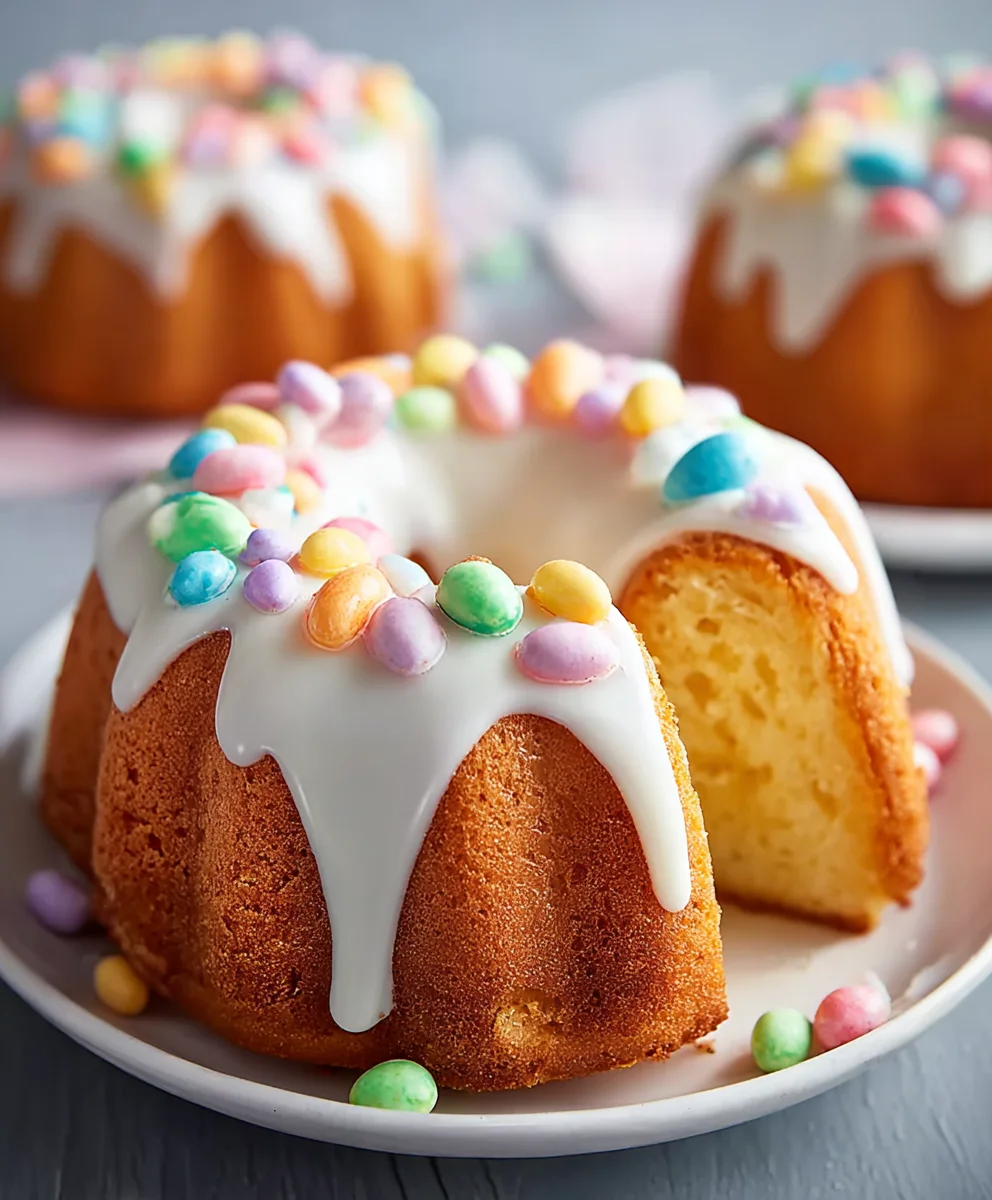
Once your Bundt cakes are completely cool, place them on a serving plate or a piece of parchment paper to catch any drips. Drizzle the colored glazes over the top of the Bundt cakes, allowing them to cascade down the sides. You can alternate colors, create patterns, or even gently swirl them together with a toothpick for a marbled effect. For an extra festive touch, you can add a few extra Easter candies on top of the glaze while it’s still wet, or even some edible glitter. Let the glaze set completely before slicing into your Surprise Inside Easter Bundt Cakes to reveal the colorful candy center.
Conclusion:
And there you have it! Your very own batch of delightful Surprise Inside Easter Bundt Cakes. We hope you’ve enjoyed following along with this recipe and are excited to bake these festive treats. These cakes are not just delicious, but they also bring an element of fun and wonder to any Easter celebration, making them a guaranteed hit with both kids and adults. The tender crum extractb, the sweet glaze, and of course, that magical surprise center, combine for an unforgettable dessert experience.
For serving, these Surprise Inside Easter Bundt Cakes are wonderful on their own, but they also pair beautifully with a dollop of fresh whipped cream, a scoop of vanilla bean ice cream, or a side of fresh berries. Consider dusting them with a little extra powdered sugar for an added touch of elegance.
Don’t be afraid to get creative with the variations! You can experiment with different extracts in the batter, like almond or lemon, to complement the surprise filling. For a more decadent twist, try folding in a handful of mini chocolate chips or chopped nuts. And for an even more festive look, consider adding edible glitter or pastel sprinkles to the glaze. The possibilities are truly endless! We encourage you to have fun with the process and make these Surprise Inside Easter Bundt Cakes your own. Happy baking and a very Happy Easter!
FAQs:
Q: How far in advance can I make these Surprise Inside Easter Bundt Cakes?
You can bake these cakes up to two days in advance. Store them in an airtight container at room temperature. If you live in a very warm climate, it’s best to refrigerate them, but let them come to room temperature before serving for the best texture.
Q: What kind of “surprise” can I put inside?
The most popular surprise for these Surprise Inside Easter Bundt Cakes is a smaller cake batter baked into the center, often in an Easter shape like a chick or bunny. You can also use a cavity filled with a different colored cake batter, or even a ganache or candy filling if you prefer. Just ensure it’s senon-alcoholic aled well within the batter to avoid leaks.
Q: Can I make smaller, individual Surprise Inside Easter Bundt Cakes?
Absolutely! You can adapt this recipe for mini bundt pans. You’ll need to adjust the baking time, so start checking for doneness much earlier, likely around 15-20 minutes. The principle of creating the surprise center remains thenon-alcoholic aleme, just scaled down for individual portions.
Surprise Inside Easter Bundt Cakes-Festive & Fun Recipe
A fun and festive Bundt cake recipe with a hidden surprise of colorful Easter candies baked inside. Perfect for an Easter celebration!
Ingredients
-
1 box white cake mix (or homemade), prepared according to package directions
-
Approximately 2 cups mixed Easter candy (M&Ms, jelly beans, Cadbury Mini Eggs, or any other small, colorful candies)
-
2 cups confectioners’ sugar
-
2 tablespoons milk, plus more if needed
-
1 teaspoon lemon juice
-
1/2 teaspoon vanilla extract
-
Gel food coloring in pastel Easter colors
Instructions
-
Step 1
Prepare the cake batter according to the white cake mix box directions or your favorite homemade recipe. Ensure it is smooth and free of lumps. -
Step 2
Generously grease and flour your Bundt pan. This is crucial for a clean release. -
Step 3
Spoon about two-thirds of the cake batter into the prepared Bundt pan. Carefully arrange the mixed Easter candies evenly over this layer of batter. -
Step 4
Spoon the remaining one-third of the cake batter over the candies, ensuring they are completely covered. Smooth the top of the batter. -
Step 5
Bake the Bundt cake in a preheated oven (typically 325-350°F or 160-175°C) for 30-45 minutes, or until a skewer inserted into the cake portion comes out clean. -
Step 6
Let the cake cool in the pan for 10-15 minutes before inverting it onto a wire rack to cool completely. -
Step 7
While the cake cools, prepare the glaze by whisking together confectioners’ sugar, milk, lemon juice, and vanilla extract until smooth and pourable. Add more milk if needed. -
Step 8
Divide the glaze into smaller bowls and tint each with a different pastel gel food coloring. Stir until uniform. -
Step 9
Once the cake is completely cool, drizzle the colored glazes over the top, allowing them to cascade down the sides. Add extra candies or edible glitter if desired. Let the glaze set before slicing.
Important Information
Nutrition Facts (Per Serving)
It is important to consider this information as approximate and not to use it as definitive health advice.
Allergy Information
Please check ingredients for potential allergens and consult a health professional if in doubt.